Effective Job Posting Tips to Hire Truck Drivers Faster and Improve Results
Introduction
According to the American Trucking Associations, the trucking industry will experience a driver shortage that is about 60,000 drivers in 2025. This gap will expand to 160,000 drivers by 2030. In addition, the situation may become even worse since the demand for e‑commerce is increasing while fleets are unable to meet the demands, moving the trucks. The speed and clarity of your employment advertisements are crucial, and they often make the difference between hiring a fully staffed team or sitting on idle assets. Now, the drivers with a mode of searching work that e.g. telematics, route‑optimization tools, and factory digital logs would also like to see this prominently — these are the signs that your fleet is a high‑tech one that helps the drivers and thus encourages them to use their information. By improving your job advertisements you not only attract job candidates faster but also raise the quality of applications, reduce turnover, and improve long‑term retention.
Know Your Audience
The first step to successful recruiting is to show your understanding. Modern drivers consider factors other than only their salaries, they emphasize having a steady work schedule and the choice of routes. In a survey published by Commercial Carrier Journal, it was found that in addition to remuneration, more home time and the possibility to choose the trip are prerogatives for drivers’ decisions to leave one company and join another. Moreover, the prospect of dealing with driver issues that are not related to work—such as oiler and tire stuff, mental health resources, and clear safety programs — proving that the company goes beyond abandoning workers and fulfills quality employment promises. Drivers would find that your ads amplify their concerns and thus it would resonate with accordingly with both the fractions of old and young drivers.
Create an Attractive Job Title and Clear Description
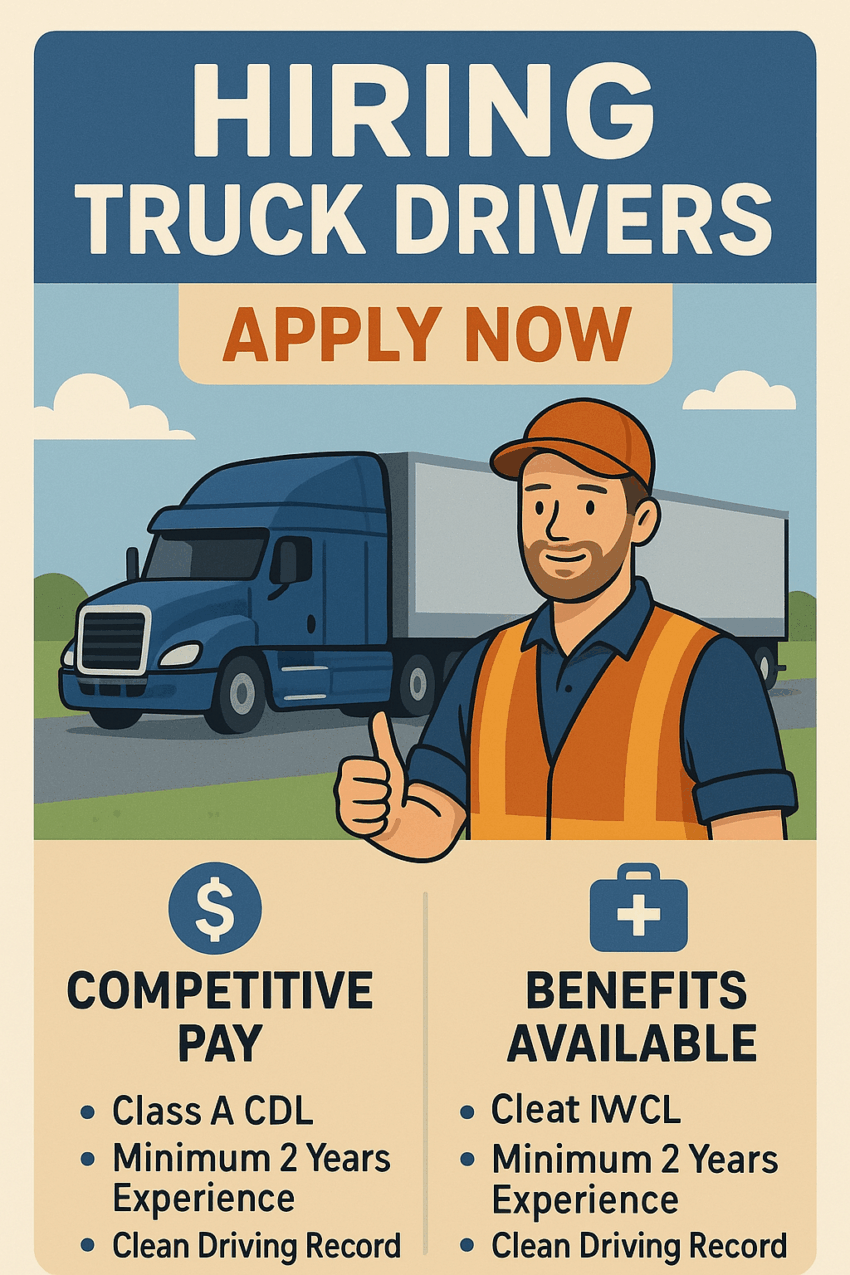
The job title is your first — and in certain situations, only — chance to grab the reader’s attention. Use the recognized standard terms in the industry like “OTR Truck Driver,” “Class A CDL Local Routes,” or “Regional CDL Driver” as the base. Then you can either add geographic indicators (e.g., “Dallas → Chicago OTR”) or not. In the description:
- Open with a short company overview stating your ethos, fleet quality, and the safety record.
- Bullet out essential duties (e.g., route planning, vehicle inspections, electronic logging).
- Enumerate necessary qualifications: endorsements, experience levels, and any preferred skills.
- Explain equipment and schedules: what tractors will be employed, average trip lengths, and how much time off will be given.
- Finish with benefits and next steps: pay structure, signing bonuses, and application link.
Letting the text be concise, will thus make it possible for drivers to read it, select, and apply for the job fastly.

Include Transparent Compensation and Benefits
Transparency builds trust. Write the exact salary brackets — such as $0.55–$0.65 per mile or $70,000 – $85,000 annual potential — of course, together with sign‑on bonuses, health insurance, 401(k) matching, paid time off, and other similar incentives. Also, include the operational shows like drop‑and‑hook routes, no‑touch freight, and pet‑friendly policies to brag about your business. The more extensive the compensation package on display, the better the odds that the applicants will bypass ghost applications and unauthorized clicks.
Optimize for SEO and Visibility
To hire in bulk, you want to go beyond just your marketing efforts. You cannot ignore SEO. Join your most important keywords — truck drivers, job posting tips, hiring — which are LSI keywords like “vacancies,” “employment,” “recruiting,” and “advertisement” into headings, bullet points, and the meta descriptions. You can draw on the locality‑specific terms by using “SEA to PDX OTR Routes” to target applicants in the area. Use high‑traffic sites like Indeed and LinkedIn to post the jobs and involve niche platforms such as Trucking Talent and AllTruckJobs, which are specifically built for CDL professionals. Make sure your company’s careers page is broadly advertised in the site’s header and footer to gain organic search traffic.
Leverage Social Media and Paid Promotion
Social media channels allow you to personalize your driver recruitment campaign. Use authentic short videos with drivers being the stars where they talk about life on the road, give tips on safety, or tell their favorite route stories. Use Instagram Stories, TikTok challenges, and Facebook’s job post feature to broaden reach. Don’t hesitate to allocate budget for sponsored ads targeting specific demographics — such as age, years of CDL experience, and regions—to connect to passive candidates who are otherwise not actively job‑hunting. Paid promotion can dramatically increase visibility, driving faster and higher‑quality applications.
Ensure Mobile-Friendly and Streamlined Applications
Truck drivers have a laid‑back lifestyle and rely heavily on mobile devices, meaning your recruitment process should be mobile‑friendly. Research has shown that mobile‑optimized forms completed in under five minutes give significantly better results. Adopt a responsive design, reduce the required fields on the application form, and utilize SMS-based login to facilitate easy access. Customers will love real‑time chat or text support from where they can ask questions and keep it going. Besides improving the candidate experience, the targeted mobile application process could result in a time‑to‑hire reduction of over 30%.
Take Advantage of Technological Tools and Make Use of Targeting Based on Data
Modern ATS is like a window through which you can see the overall postcard performance since it provides you with metrics like click-through rates, application completion, and source-of-hire. For the channel measurement unlike Google Analytics, use UTM parameters without bothering about the cost-per-applicant. Allow your imagination to take flight and do A/B testing of titles, descriptions, and calls-to-action to find out which one is the most appealing to people. Through the use of data-driven small adjustments to your tactics, you will constantly get better results, cut down on wasted money, and speed up the outcome.
Go for Niche Channels and Referral Programs
The most effective way to make your sources less vulnerable is to enter partnerships with local CDL schools, veterans’ organizations, and associations such as Women In Trucking. By organizing seminars at the driving academies, you can have a face-to-face interaction with the employees, where you can also collect resumes and conduct the first interview. At the same time, you may start a referral program, as the research shows, that traditional re-entrants last longer-49% of the firms declare an improved retention-and through referrals, it is done in less than a month. Providing tiered incentives (i.e., $500 after 30 days, and $1,000 after 90 days) for employees who will refer quality candidates is a great idea, which would not only speed up the hiring process but also bring the cost per hire down.
Checklist for an Effective Truck Driver Job Posting
| Job Posting Element | Tip |
| Job Title | Use specific phrases like “OTR Truck Driver” or “Class A CDL Local Routes” plus locale. |
| Compensation & Benefits | Post pay ranges, sign‑on bonuses, health plans, and operational perks up front. |
| Role Details | Bullet routes, home time, equipment, and scheduling for clarity. |
| Qualifications | List required licenses, endorsements, and minimum experience. |
| Application Process | Streamline for mobile: <5 min, SMS login, clear CTAs (“Apply Now”). |
| Visibility | SEO‑optimize with keywords; post on Indeed, LinkedIn, Trucking Talent, and niche sites. |
| Engagement | Showcase driver testimonials and fleet culture via social videos and paid ads. |
Monitor Performance and Refine
You will be able to spot bottlenecks and measure improvements given that you track the right KPIs — time‑to‑fill, views‑to‑applications, application‑to‑hire ratio, and 90‑day retention. Keep channel performance under review always, adjust your spend according to cost‑per‑applicant, and change your messaging through A/B testing. Over time, the constant feedback loop that you develop will accelerate your truck drivers hire pipeline as well as the quality of candidates.
Conclusion
In the current rapidly changing market scenario, well‑articulated job postings have become the most powerful tool for recruitment. Alongside job posts that are clear and detailed, with transparent pay, mobile‑optimized applications, targeted SEO, social media engagement, and robust referral and analytics programs — and with the use of specialized platforms like Trucking Talent — you will be able to hire drivers faster, cut down on turnover and subsequently, can build a reliable workforce which would in turn keep your fleet on road and your business prosper.


Leave a Reply