High-power charging is coming: NREL’s roadmap for 1 MW truck chargers and what it means for depot design
High-power charging is here: NREL’s 1MW truck chargers & depot design
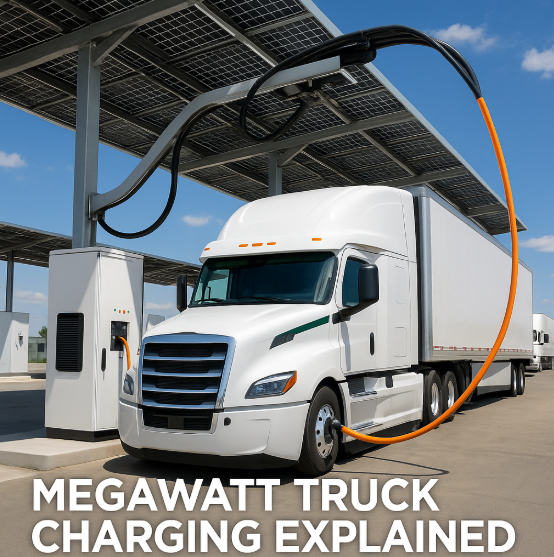
High-power charging is here — NREL’s vision for high-power charging, truck chargers, depot design, electric vehicles, and infrastructure is paving the way for the future of trucking facilities. High-power charging at the 1 MW level is the keystone of NREL’s roadmap for truck chargers, depot design, electric vehicles, and infrastructure. According to NREL, high-power chargers will help charge large commercial vehicles promptly at depots and travel centers. Leadgamp, a progressive trucking company, is already reorganizing depot layouts and electrification systems from the outset in accordance with NREL’s megawatt charging initiatives.
Why high-power charging is important — and NREL’s megawatt roadmap
NREL (National Renewable Energy Laboratory) has cited the fact that while current DC fast chargers are limited to 350 kW, medium and heavy-duty electric vehicles (EVs) will require quite a bit more than that — up to even 1 MW and more. High-power charging avails for such large electric vehicles to recharge within minutes thus making for a more efficient business. A typical example is electric trucks that don’t have time for stays that exceed a few hours due to multiple charging stops.
In this shift, truck driver recruiting services will also play a role — helping fleets staff and train drivers capable of handling new electric vehicle protocols and depot operations.
NREL’s roadmap talks about the following:
- Scaling the charging power up to megawatts using the Megawatt Charging System (MCS)
- Integrating site-level grid coordination and energy optimization
- Standardizing components, interfaces, and protocols for cross-manufacturer compatibility
The roadmap primarily features technology, but it also emphasizes deploying strategies — how to complement policy, utility collaboration, infrastructure design, and depot operations into an effective approach to mass-scale electric trucking.
What high-power charging implies for depot design
Electrical infrastructure overhaul
Depots will need to do a complete electrical rework in order to install 1 MW chargers. The installation of high-capacity transformers, robust distribution equipment, protection systems, and possibly substation upgrades will be a part of the process. Under many circumstances, depot owners will need to arrange with utilities directly to prevent transformer overloading or voltage fluctuations.
Spatial planning and vehicle flow
Megawatt truck chargers are not only faster, but larger as well. The depot layout must provide ample space for semi-trucks to maneuver, safety clearances, and manage cables . Charging stalls should accommodate longer charging times without such operations interfering with the loading or blocking the lanes.
Energy management technologies
The peak electricity price may cause high-power charging to be uneconomical unless there will be battery energy storage and intelligent load management. The smart depot systems will predict the demand, optimize charger load, and decide whether to take energy from the grid or batteries based on it.
Futureproofing with MCS
NREL’s push for the Megawatt Charging System standard will be the main reason depots will be able to achieve long-term infrastructural compatibility. The standardized protocol and connector will let Leadgamp and others scale their infrastructure independently without the worry of hardware lock-in.
NREL’s research in action
The Megawatt Charging Emulator of NREL is the biggest of its kind. It simulates how power, vehicles, and systems behave altogether when they are at full power. Test results from simulations that mimic real-world charging of variables have helped NREL to authenticate results concerning mesh communication, heat, and electrical performance indices for MCS systems.
Moreover, NREL works along with hardware vendors, fine-tuning the first iteration of the products and sharing their experiences with standards groups. Their work has had a large-scale impact on the physical interface, safety guidelines, and energy management strategies now employed in multiple trial sites across the United States.
Global trends in high-scale charging
The shift to high-power truck charging is a global enterprise. In Europe, logistics groupings are building shared charging depots with MCS connectors for cross-border electric freight logistics. Substantial corridor projects are already underway in Germany, France, and the Netherlands.
In the U.S., states like California and Texas are deploying solar and power storage systems to support 1 MW charging at freight depots. Inland states are pointing out zero-emission freight pathways with depot and grid funding on the horizon.
Private enterprises like communication networks and utility-backed infrastructure groups are aiming to deliver power at scale and have targeted 2030 as the year for full depot electrification.
Megawatt charging benefits for different types of depots
Faster Isn’t Always Better: Megawatt Truck Charging Explained
Urban depots
- Frequent start/stop operations
- Benefit from dual-purpose systems (charging + solar + storage)
- Require tight footprint integration
Regional hubs
- Can implement overnight lower-rate charging + MCS lanes for rapid top-ups
- Ideal for mixed fleets (light-duty and heavy-duty EVs)
Long-haul corridors
- Require full MCS integration with multiple simultaneous charging ports
- Need grid-interactive systems to manage large loads over short periods
Leadgamp is currently using this logic to segment its depot upgrade strategy by implementing each site according to how suited it is for charger capacity, buffer energy storage, and hardware layouts.

What logistics operators need to know
Switching to high-power electric vehicles and charging requires a systems-level rethink. Some important points include:
- Less time in stop: High-power chargers cut vehicle downtime to 20–40 minutes
- Routine operation: Charging can be integrated with load/unload windows
- Cost control: Battery storage and real-time energy optimization lower long-term costs
- Regulatory advantages: Initial supporters might be able to get access to federal grants, discounts, and tax breaks
- Competitive weapon: Having a high performance readiness team as a launch pad for the new plant grants a strategic and marketing edge
Leadgamp’s operational roadmap already incorporates these priorities.
Barriers to adoption — and how to overcome them
Grid limitations
Utilities may be cautious about granting massive short-term loads. Solutions include distributed energy storage, off-peak charging, and advance coordination with grid providers.
Cost and ROI concerns
High-power charging equipment, trenching, permits, and grid upgrades are capital intensive. However, they can be offset by vehicle O&M savings, incentives, and phased deployment.
Standards maturity
While MCS is stabilizing, some operators hesitate to invest until specs are finalized. Partnering with manufacturers and compliant providers helps reduce risk.

Leadgamp’s megawatt charging strategy
As part of its electrification roadmap, Leadgamp is taking the following steps:
- Depot readiness audits to assess power capacity and grid access
- Pilot testing 500–750 kW chargers at mixed-fleet depots
- Battery storage integration to balance peak loads
- Vendor alliances to ensure modular charger deployment
- Staff training programs on EV maintenance and charging system safety
Leadgamp’s long-term vision is a network of fully MCS-ready depots serving electric trucks across key freight corridors in the Midwest and Southwest.
FAQ: High-Power Truck Charging
What is high-power charging?
High-power charging refers to EV charging systems that deliver more than 350 kW — typically up to 1 megawatt — for recharging heavy-duty electric trucks rapidly.
Why does NREL recommend 1 MW chargers?
Because long-haul electric trucks require massive energy in short timeframes, 1 MW systems reduce dwell time and maintain freight throughput.
What is the Megawatt Charging System (MCS)?
MCS is an industry-standard connector and communication protocol being developed for safe, consistent megawatt-level charging of commercial vehicles.
What will depots need to upgrade for 1 MW readiness?
Electrical service capacity, switchgear, transformer sizing, cabling infrastructure, and physical layout will all need modification. Smart energy controls and safety systems are essential.
Are there real-world megawatt charging projects?
Yes. Both in the U.S. and abroad, pilot stations are already operating with 1 MW or higher chargers. Some include solar panels, battery storage, and MCS hardware.
How is Leadgamp preparing?
Leadgamp is conducting site audits, deploying scalable charging infrastructure, collaborating with grid operators, and training employees for a megawatt-scale future.
In a nutshell
High-power charging is no longer a futuristic vision — it’s here. NREL’s roadmap for 1 MW truck chargers shows how depots will evolve. For fleets to stay competitive and efficient in an electric future, they must redesign depot infrastructure around megawatt charging.
Leadgamp is leading the way. By aligning with NREL’s models and integrating high-power technology today, the company ensures its position in next-generation freight logistics.
Is your operation ready for the megawatt revolution?


Leave a Reply